What is this Gesture?
Nisreen Kaj
What is this Gesture?
What does it mean to write (and not write) on water? For talk to collect trash? To sit in silence when asked to speak? Notes on watching Maryam Kazeem's Protest Grammars
March 16, 2026
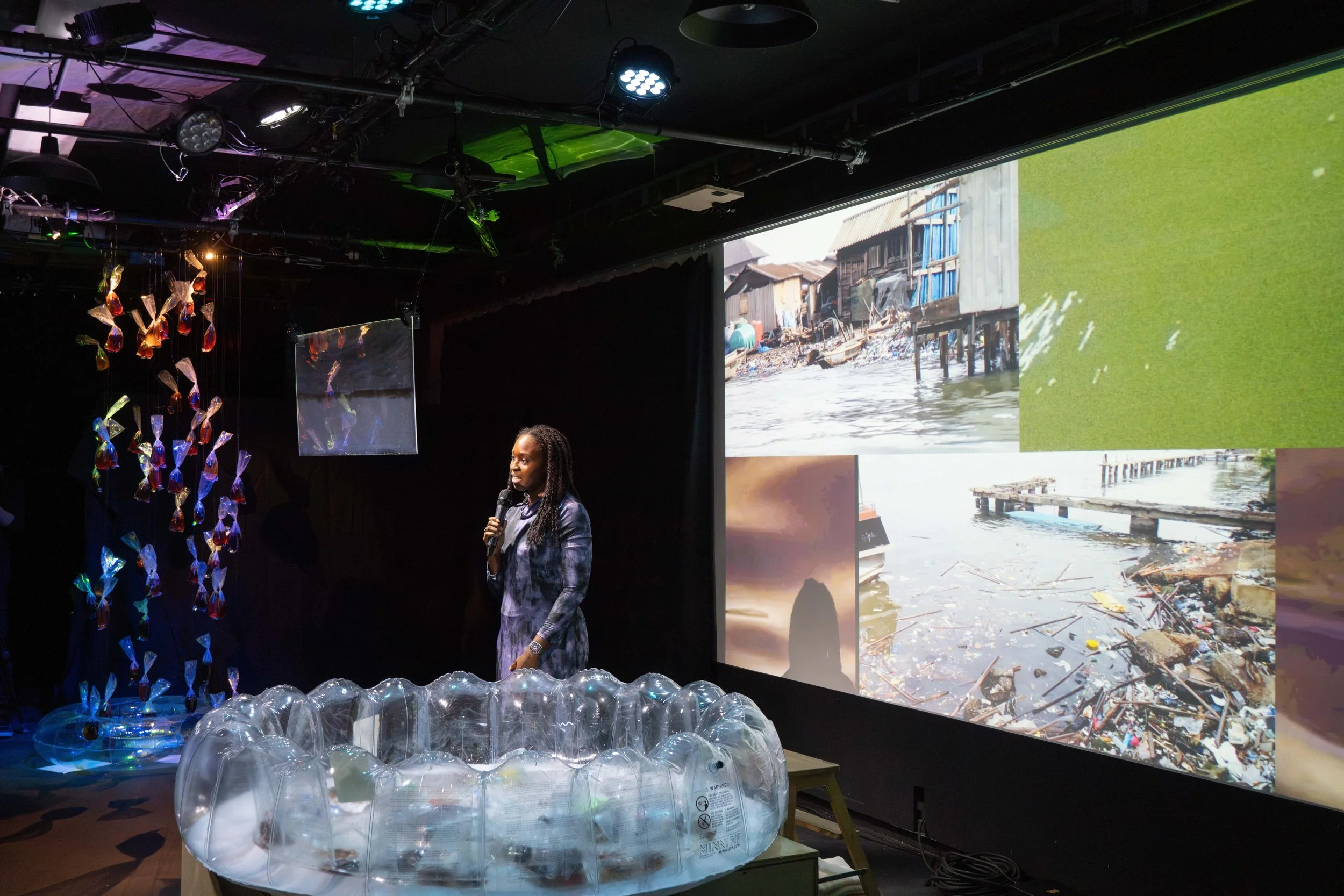
Photo by Ji Hoon Kim
A livestream. A stream, live. On my screen, a boat bobbing on the Lagos Lagoon, a shoal of trash swimming around it. It’s 5:30pm in Lagos where I am, and where Stephanie sits on the boat before a typewriter called The Future Protest. Two smaller screens float on the top left corner: one of a wheel attached to the side of the boat, its blades gently brushing the water; the other of Maryam Kazeem in a dark room in New York.
Maryam begins Protest Grammars, a lecture performance across geographies, bodies, mediums. Her words flow, almost tidal, vacillating between reflections, frameworks, theory, history, questions, speculation. Each sentence feels like an attempt to navigate the Lagos Lagoon itself. Then a prompt appears on the screen as she asks: “What is this gesture?” The screen grows quieter. The question waits for an answer.
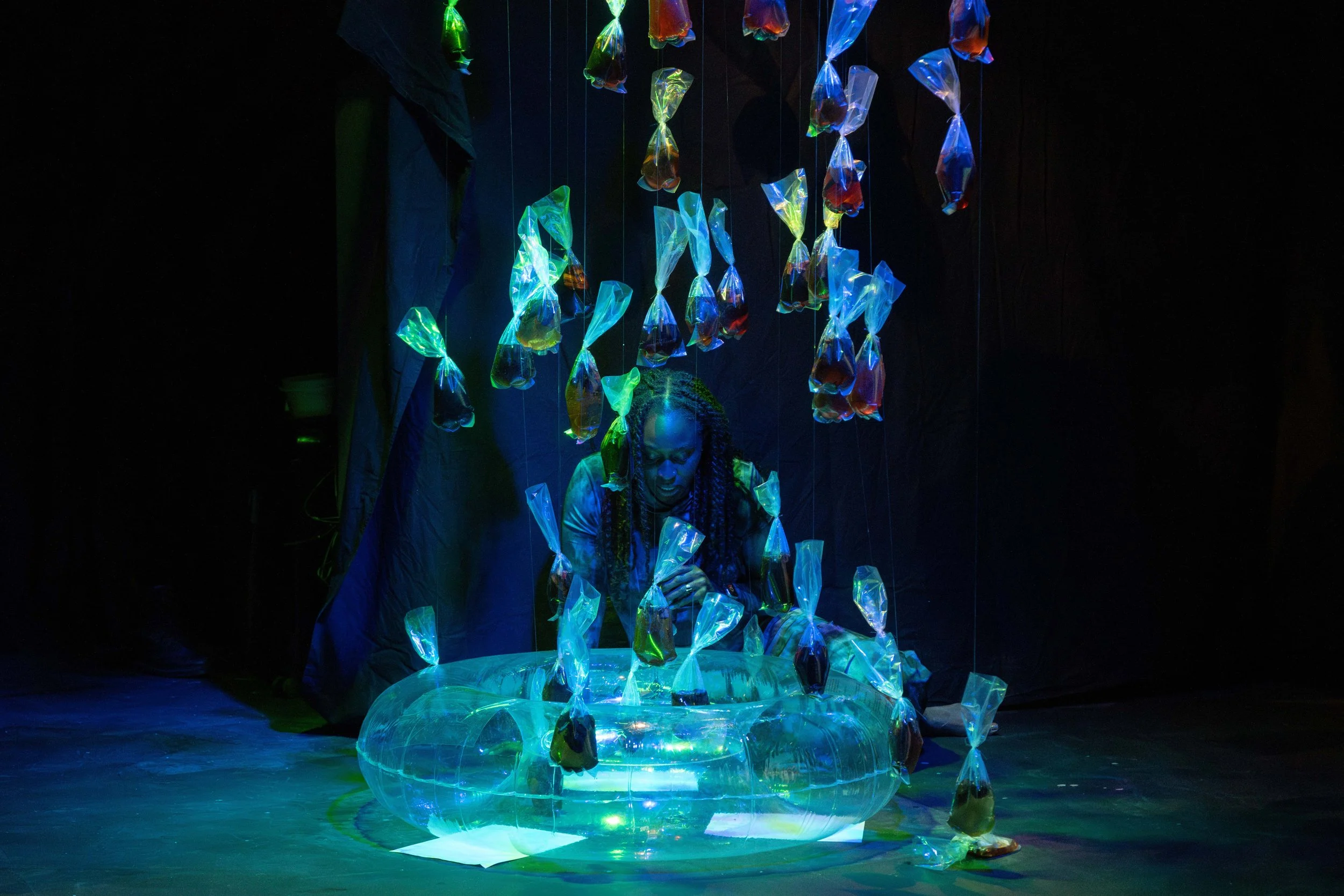
Photo by Ji Hoon Kim
We, unseen viewers, are told we can record an anonymous response, speaking it into existence. Our words will be received in Lagos for Stephanie, who is part of the team on Protest Grammars, to type. Each keystroke will power the wheel, the turning picking up trash in the lagoon. Words as energy, as action. As Stephanie types away, our responses appear overlaid on-screen as stream-like calligrams. Maryam continues: “When I speak, my words do something. But what are they doing?”
“What is this gesture?” An incantation layered over imagery, returning throughout the 45-minute performance. Each time I hear it, no matter how long I stare at the four words, nothing rises to my tongue. I don’t know what to say. Looking back, perhaps that is an answer: to sit with silence, to be comfortable with not knowing, not controlling, not shaping. To resist the urge to fill a gap.
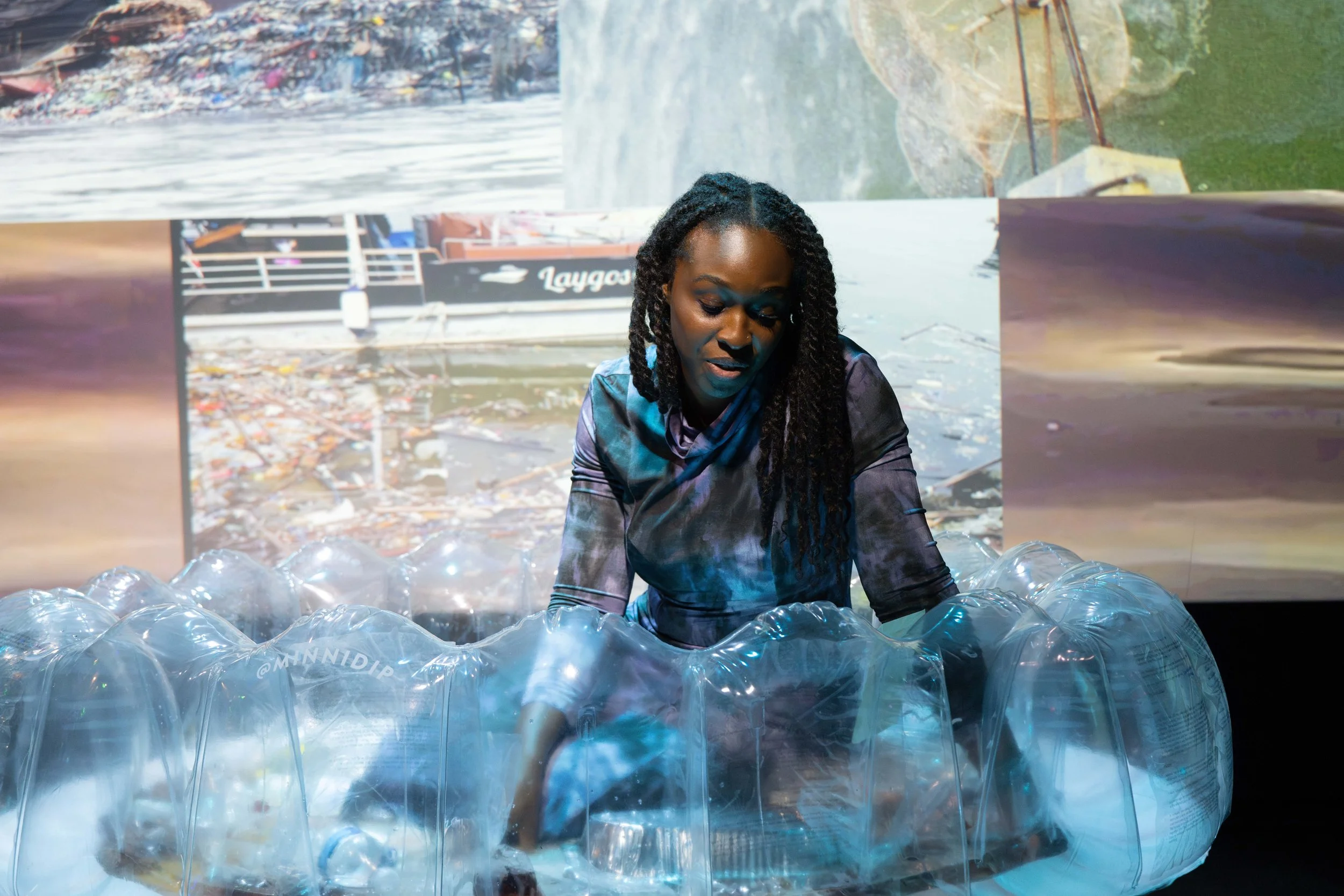
Photo by Ji Hoon Kim
Gap. Maryam explains that the word lagoon comes from laguna, from lacuna, meaning a gap. Colonial grammar, she says, turned this body into a gap, into property, into a problem to be solved. Guiding us through history, Maryam explains how colonial logic created this void, and how colonial actions tried to fill it, burying histories, spiritualities, realities, relations, identities, tongues, alliances. Lagoon: six letters, too small a graveyard, entombing a world infinite.
Protest Grammars is many things, a performance of such conceptual depth that I’m still trying to go beyond its surface. It is an exploration on writing the unwritable: how to write in water (“is our trash, then, how we write in water?”) and how not to write in water (“how to leave the water alone”). It is a question on how to move away from colonial grammars and create another. It wonders where do we begin when we have no single source? It reflects on the 1861 Lagos Treaty of Cession, codifying body as territory. It is about protest, “a wave of bodies floods the streets.” Maryam draws comparisons in grammar, in syntax, to protest and water: when both stagnate, they are tolerated; when they break the banks, crisis. It is about protest asking us to dream. But when does this dream end? Or as Maryam asks: “When does a protest end?”
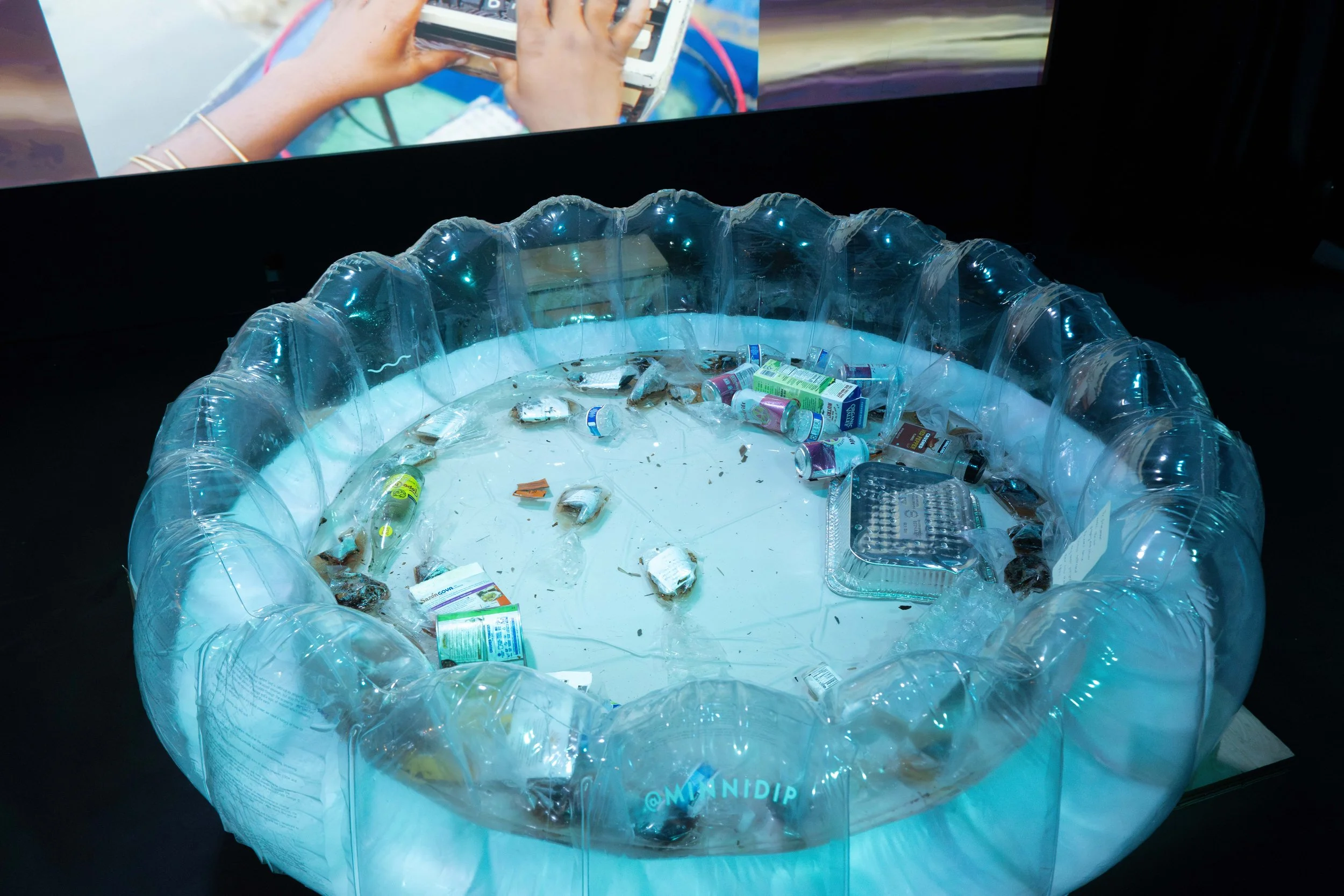
Photo by Ji Hoon Kim
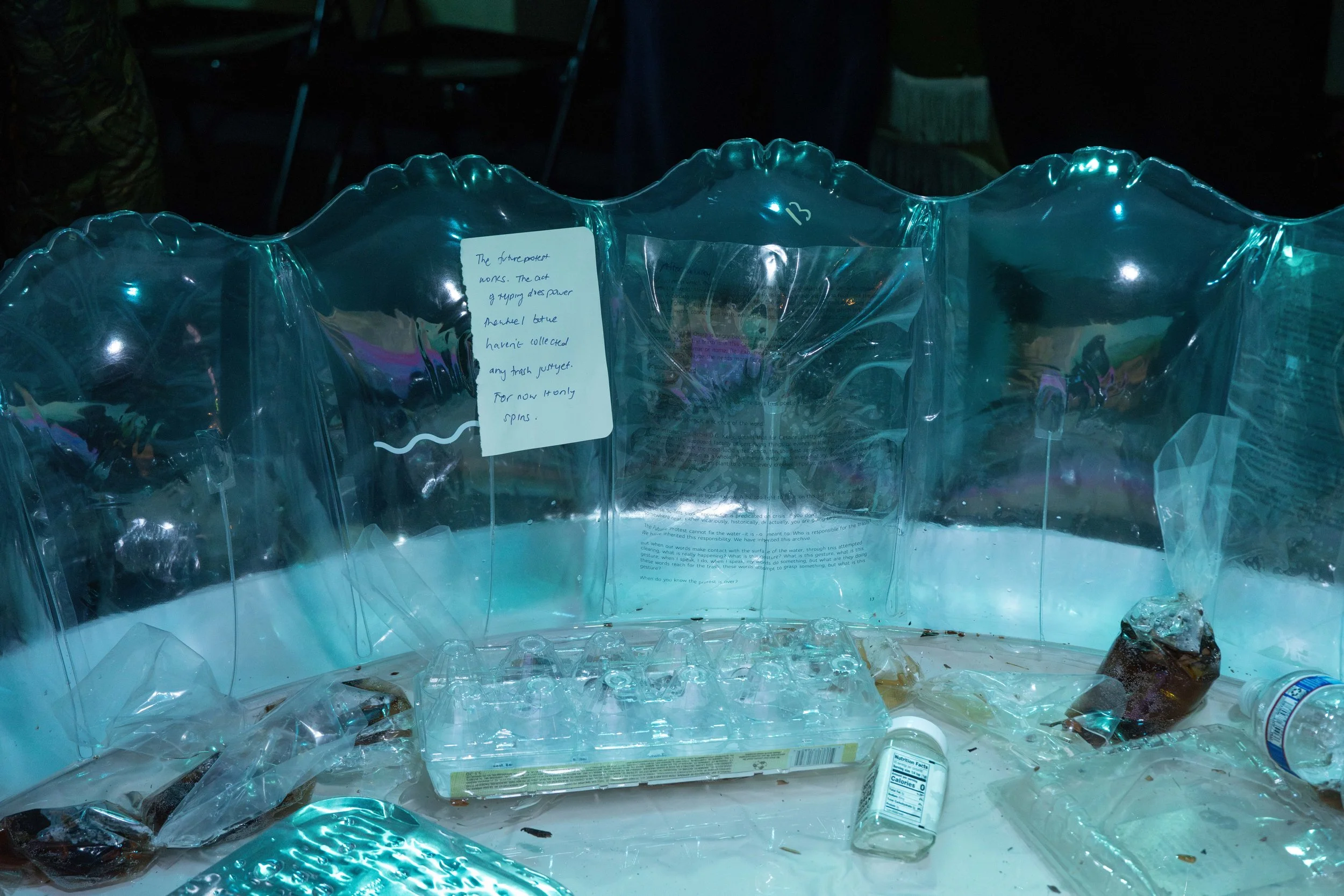
Photo by Ji Hoon Kim
She goes on to reflect on how refuse, noun, names what is discarded, while waste, adjective, describes what is consumed or expended; objects, time, bodies transformed into energy. I fixate on refuse. I then think of refuse, verb, to reject, to not accept. Are we gathered here behind our screens to refuse refuse?
Suddenly, my attention returns to the wheel on the smaller screen. I realize that it isn’t actually collecting any trash. As if sensing my confusion, Maryam explains that this is deliberate. I ask silently: “What is this gesture?” As if hearing me, she responds: “One that puts bodies on water, not to fix but to bring attention to.” This is not about efficiency. Like grammar determines how meeting is made, this is about relation: body meeting water, “how we relate to the Earth, as well as to each other.” This typewriter-meets-wheel powered by words, this Future Protest is a speculative publishing machine.
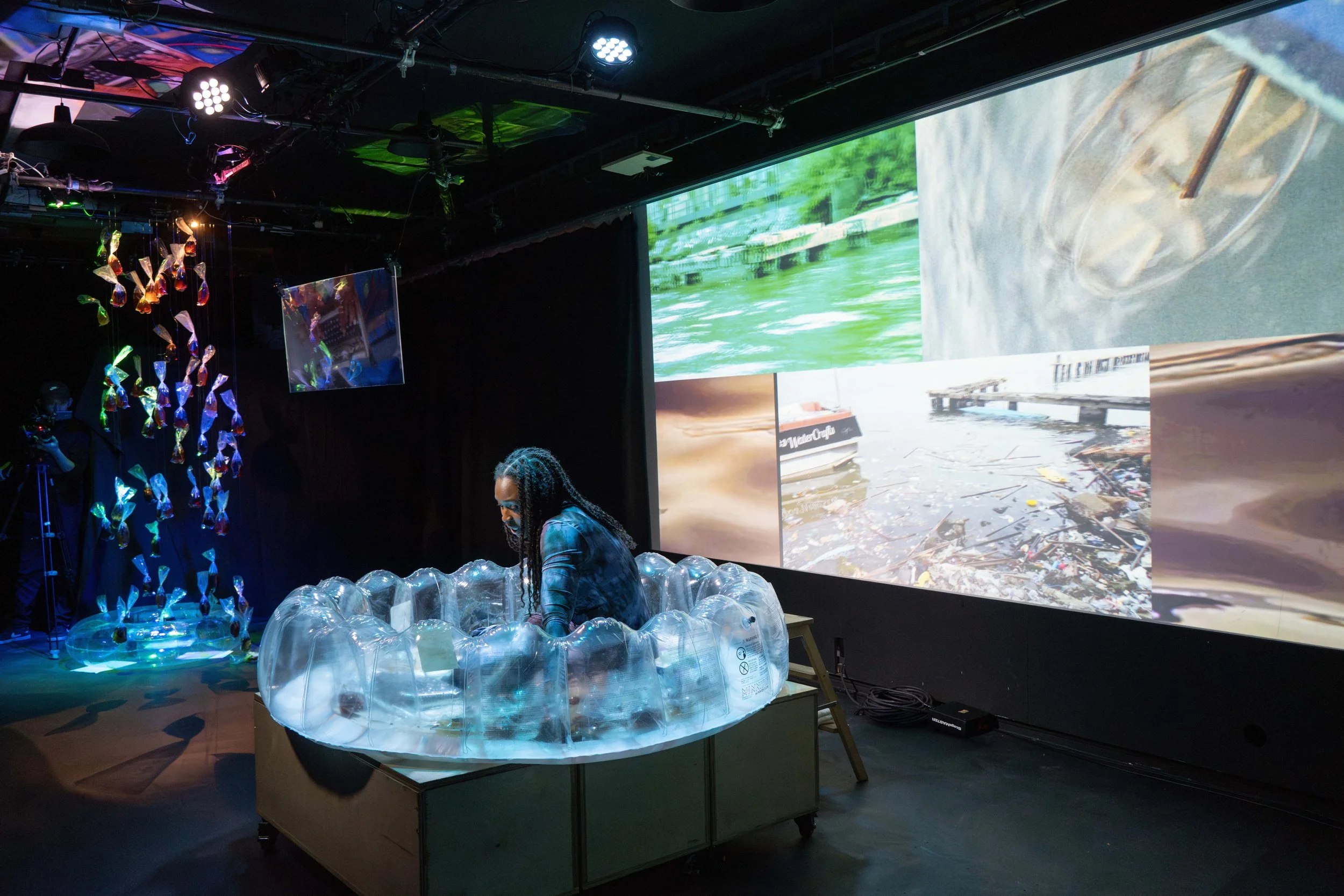
Photo by Ji Hoon Kim
As Maryam continues, we understand that before colonialists claimed the lagoon, and before they named it lagoon, swamp, wasteland, “nothing more than a sandbank,” this body was – is! – a set of relations. Habitat and home, school and ecosystem, spirits and archivist, those who are, who were, who will be. It is Osa, deity of the lagoon, and Olokun, deity of the ocean. It is a transitional abyss where, as Wole Soyinka puts it, “artists and ritual performers must enter.”
Perhaps what the lagoon is today is this greed for authorship, colonial diatribe, like oil on the ocean’s surface, immiscible, suffocating. It is hard to absorb such language, much like the concrete it has introduced to the terrain. There was another grammar, of water and soil, one absorbing the other, feeding each other. Translating one into the other is futile. Where colonial grammar dirties and empties the lagoon, what former, silenced, or new grammar – a meeting of all? – can fill it?
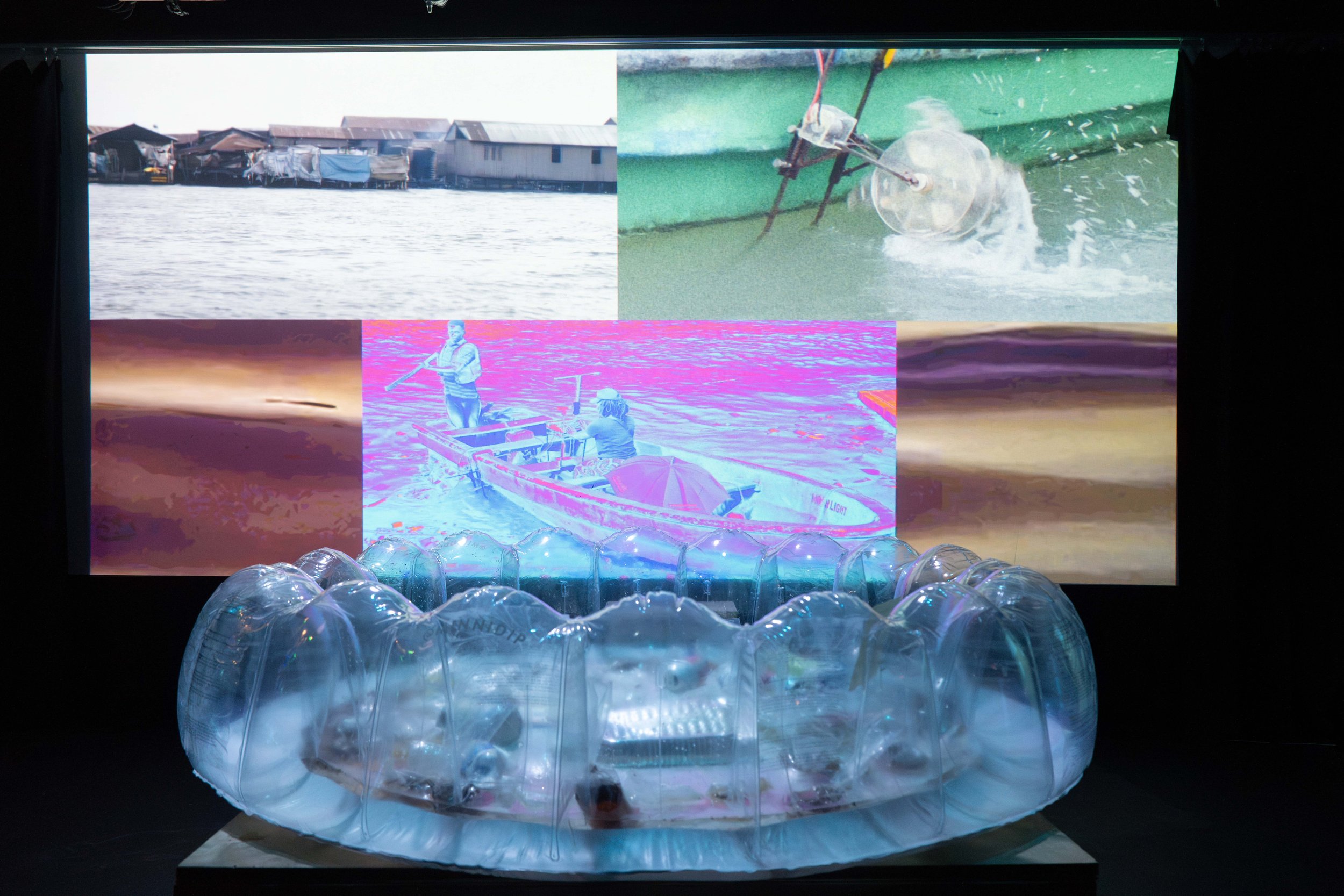
Photo by Ji Hoon Kim
As the reading reaches its end, the same invocation appears: “What is this gesture?” Perhaps it is to collectively create a language that lets us live inside the question. To use Maryam’s words: one that does not ask “what is this” but instead asks, “how do we live with it?”
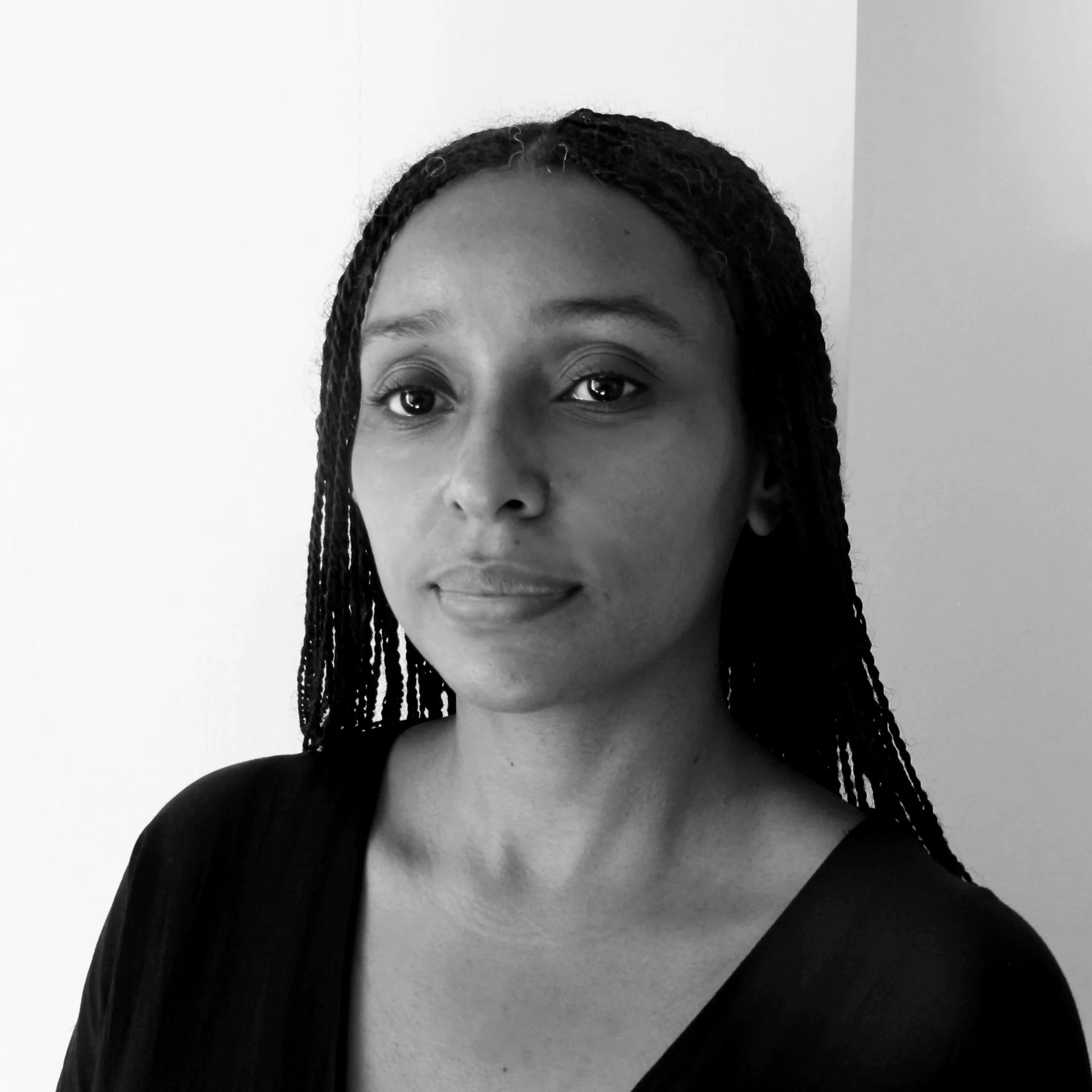
Nisreen Kaj is a creative based between Lagos and Beirut. Through video, photography, audio, personal archives, and text, her work examines belonging and othering, bridging research and creative practice to explore how narratives of identity are formed.