Call and Response
David Muenzer
Call and Response
December 17th, 2025
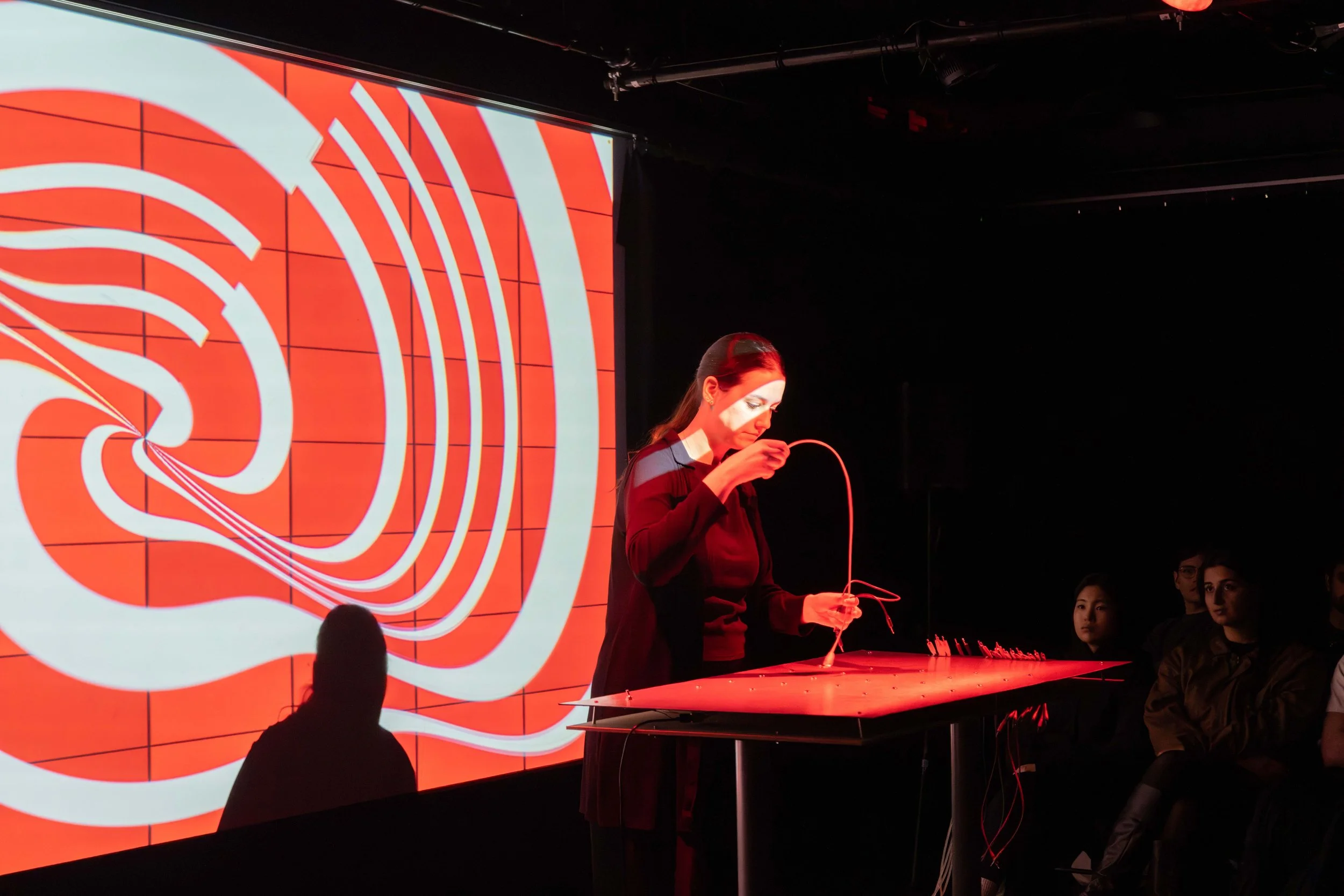
Photo by Ji Hoon Kim
Have you ever felt frustration as autocomplete fails to keep up with the speed of your rushing thoughts and fingertips? The fact that a decade or two ago, this form of stutter would not register (or exist), only makes the milliseconds of pent up, nigh constipated, inability to get-it-out all the more striking. Or perhaps you’ve seen iPad-trained toddlers pinching to zoom on a picture book?
Responsiveness seems to be increasingly a baseline state, with its absence more striking than its once-miraculous modulation of will and world. Ivana Dama, a sculptor and experimental electronic musician, creates work that operates with regard to this new baseline, often creating correspondences between viewer-participant actions and the apparatuses and outputs that comprise her installations.
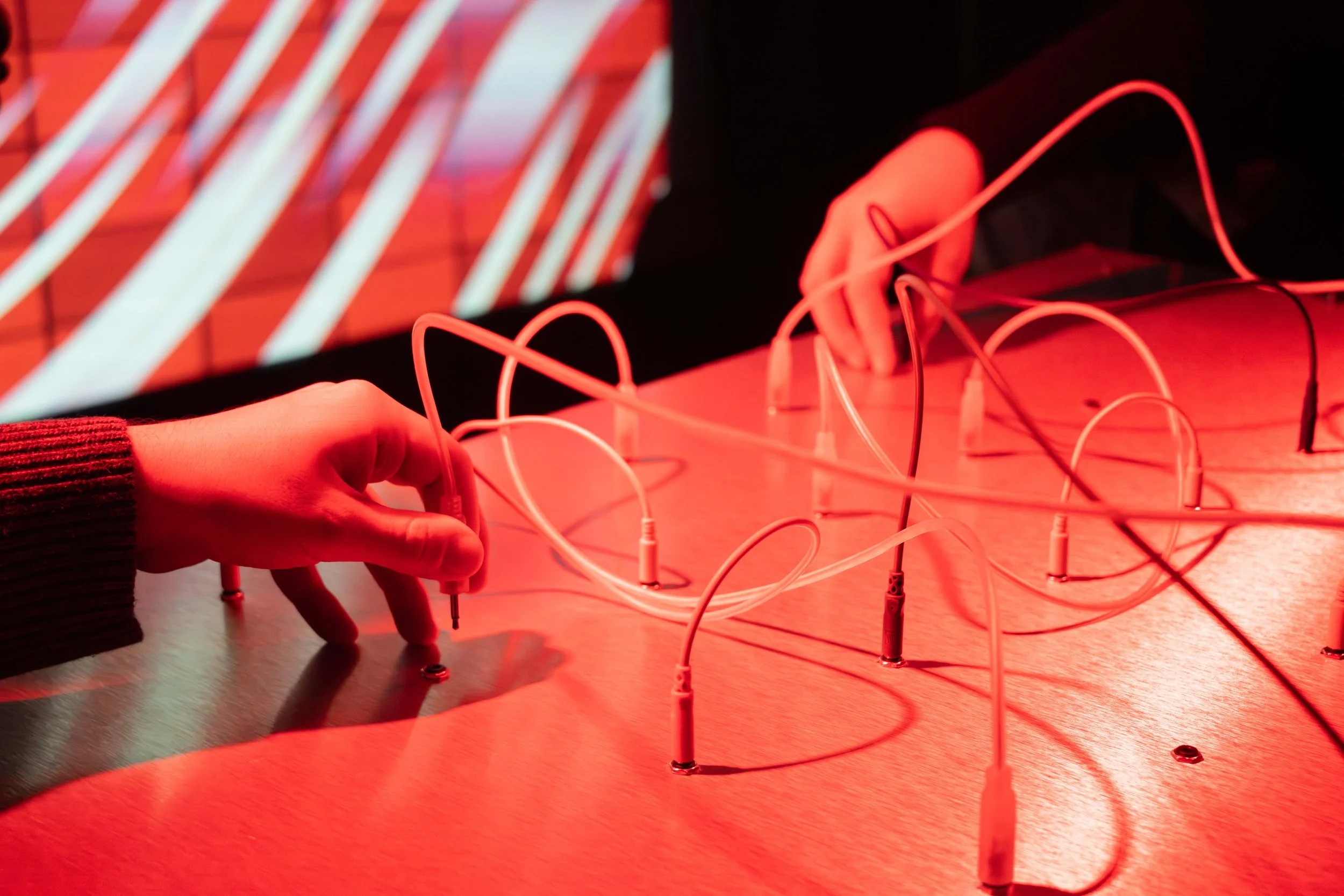
Ivana Dama. Signal Distance, 2025. Instrument: 48 x 24 x 52 inches, projection: 12 x 8 feet. Aluminum composite panels; custom PCB electronic board; patching audio cables (various lengths); video projection system; custom software for real-time audio–visual interaction. Photo by Ji Hoon Kim
Dama’s most recent work, Signal Distance (2025) was developed in collaboration with Quentin Bolsée from MIT’s Center for Bits and Atoms. The piece consists of a custom synthesizer board that produces sound based on the physical length of the patching cables, along with a projected visual output that shifts based on sound in the room. Participants were invited to move cables in and out of slots, changing the tones. These changes in tone, in turn, modulated the target-patterned visual output, whose red and black radar-like lines illuminated the room.
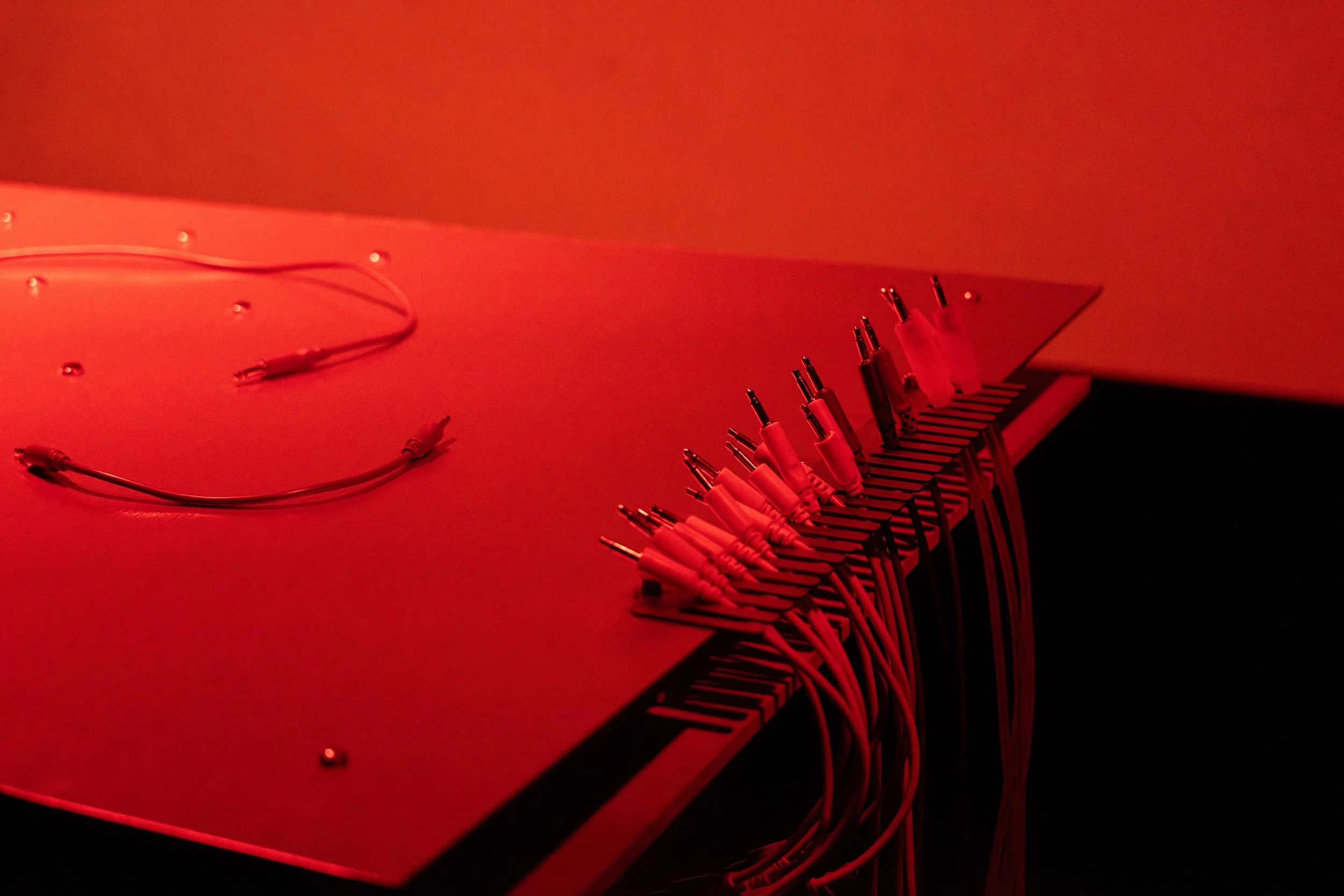
Photo by Ji Hoon Kim
Signal Distance underscores the baseline responsiveness that is a part of our mediated everyday, as the tuneable sensitivity of the visualizer rippled from footfalls and coughs as much as the synthesizer tones. The title—referring to the amount of time it takes for light to travel in a cable—makes this timing, so beyond human perception, into the core operation of the instrument, and opens it for play. The fact that participants in the recent installation at CultureHub returned on subsequent days with their own patch cables in tow suggests that this invitation was not just a theoretical conceit. Through it all, the primary light source, that colored visualizer, operated like red light therapy or a panic room alert—the former, perhaps more in tune with the convivial mood of play, and the latter more aligned with Dama’s practice as a whole.
Photo by Ji Hoon Kim
See, for instance, another of Dama’s installations, paradoxically titled Audible Silence (2023), in which two sirens originally used to signal bombing in Belgrade are encased in vacuum chambers. By removing the invisible medium through which sounds traverse, the pitch disappears. A valve controller is set on a timer, and periodically, the air and air-raid-sound returns.
The call of a siren demands a bodily response. The nature of that response depends, of course, on where and how often one encounters that call. Shelter in place? Contact loved ones? Or go about your day? Whatever course of action ensues, an awareness of violence is instilled on a bodily level.
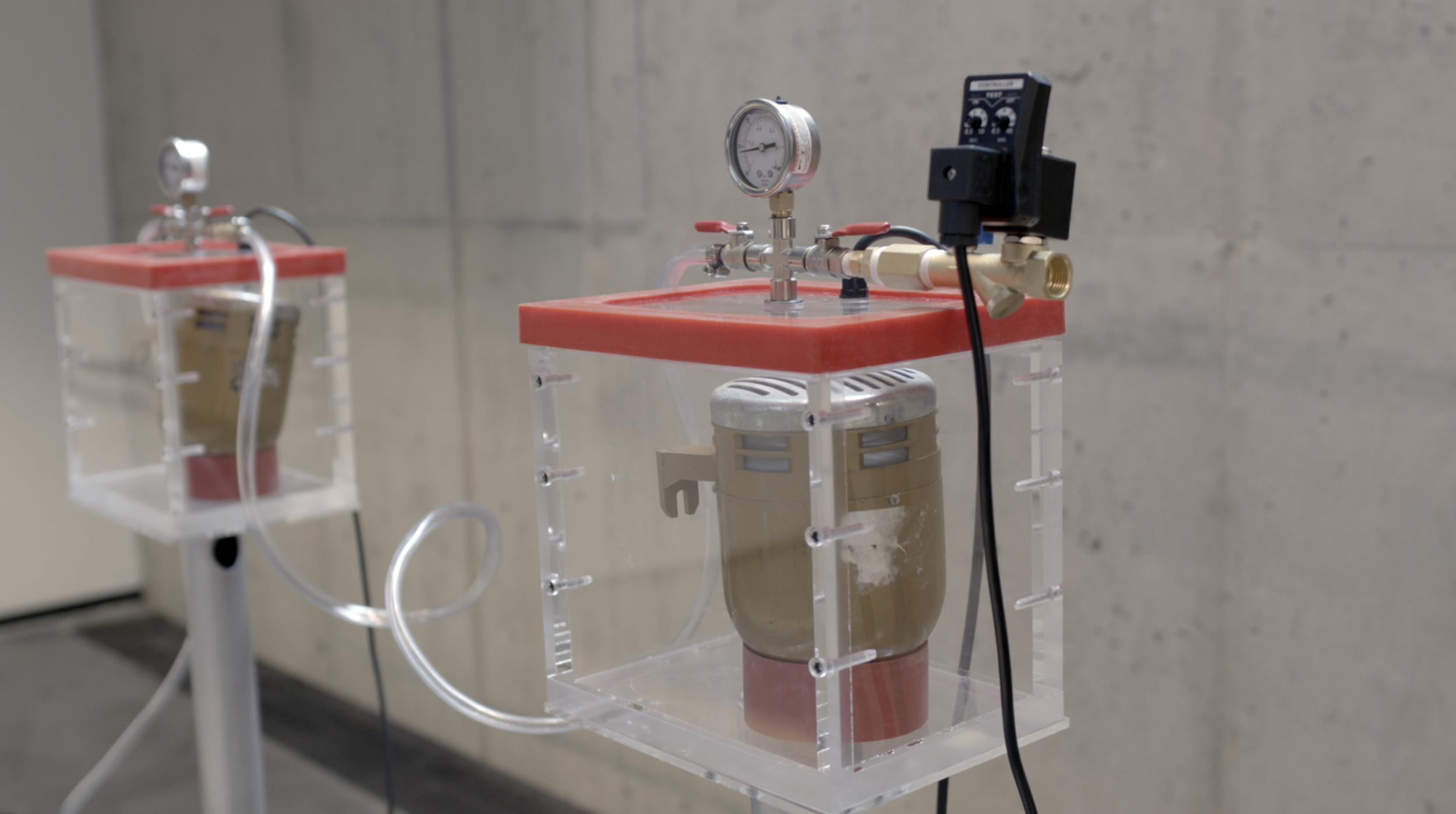
Ivana Dama. Audible Silence, 2023. Vacuum chambers, air raid sirens, valve controller, timer, vacuum pump. 56 x 52 x 27.5 inches
Joseph Wright of Derby’s 1798 oil painting An Experiment on a Bird in an Air Pump also dramatizes the cusp before violence. The titular bird is encased in a glass bubble, where the air pump will soon suffocate the animal to demonstrate the vacuum. This theatrical genre painting dilates time, as the horrified face of the young girl in the center right anticipates the deadly act to come. Robert Boyle’s 17th-century air pump invention, however material, produced theological ripples as its production-of-absence was understood by the Church of England as a heretical challenge to the omnipresence of God.
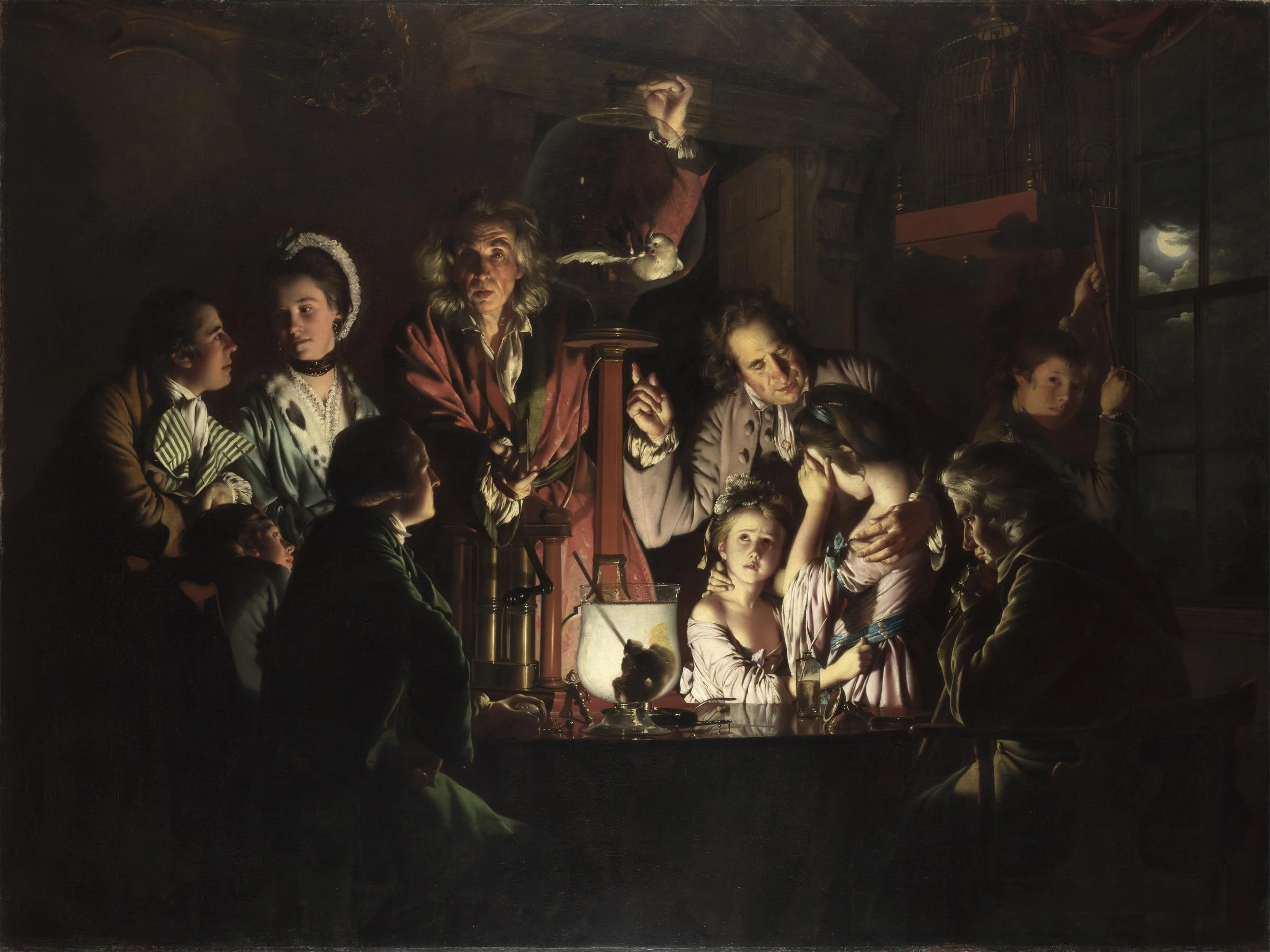
Joseph Wright of Derby. An Experiment on a Bird in the Air Pump, 1768. Oil on canvas. 72 in × 94.5 inches.
Dama’s work reminds us that the air raid siren is an emanation of state power, a voice that sits uneasily within the well-built and soundly functional sculptural presence of both Signal Distance and Audible Silence. Her ongoing collaborative work with scientists results in artworks firmly rooted in their material culture. The aesthetic of these highly engineered pieces is less overtly sinister than Cady Noland’s sculptural conjunctions of impersonal coldness and blood-warm scraps from life-in-the-empire, but there is a resonance. In Dama’s installations, the inherent optimism of faith in peer review, shared facts, and innovation plays counterpoint to the conflict-structured metaphors that underscore each piece.
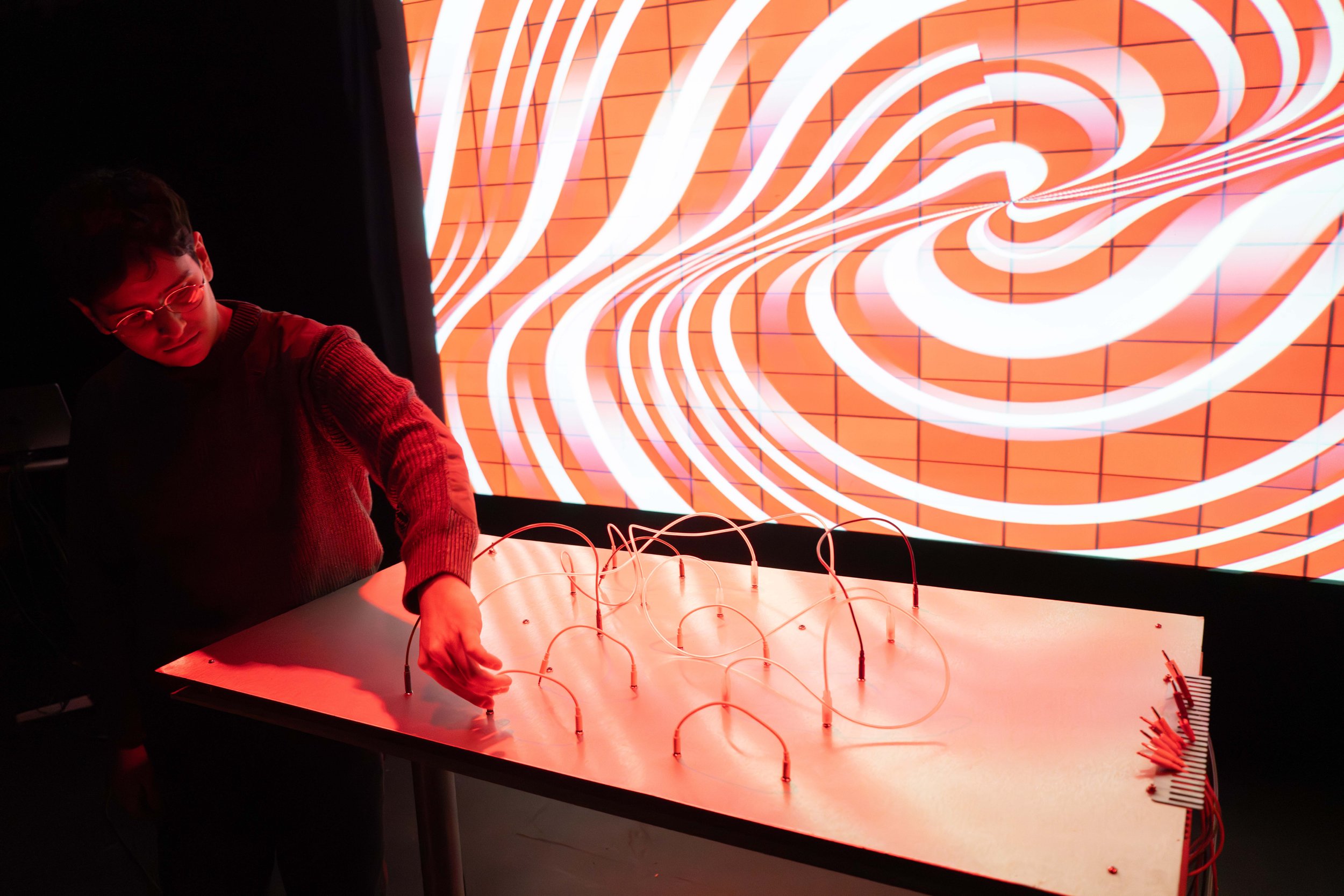
Photo by Ji Hoon Kim
Indeed, as fear and fantasies of machinic intelligence increasingly eclipse other ways of imagining the near future, considering affective undercurrents in the rationalist outlook seems politically relevant. Dama, born in Serbia, lived through the bombings in Belgrade in the late nineties, and her sense-memories of these experiences are made vivid in the present through her installations. This signal travels from 1999 and the bomb leaving the bay door of a NATO plane to the vibrations of an apartment building to the body of a child, across time and space to the muted cry of the dual alarms in 2023, showing that responsiveness can also be the capacity of a body emphasize: to cross the distance, and imagine the pain of others.

David Muenzer is an artist and writer. Recent solo presentations include Teen at Final Hot Desert, London (2025), Twin Study at Soldes, Los Angeles (2024), and Proxetics at Dracula's Revenge, New York (2022).