How to Create and Live in the Worlds We Want: An Interview with Lizz Thabet
Scribble
How to Create and Live in the Worlds We Want
An Interview with Lizz Thabet
August 25, 2026
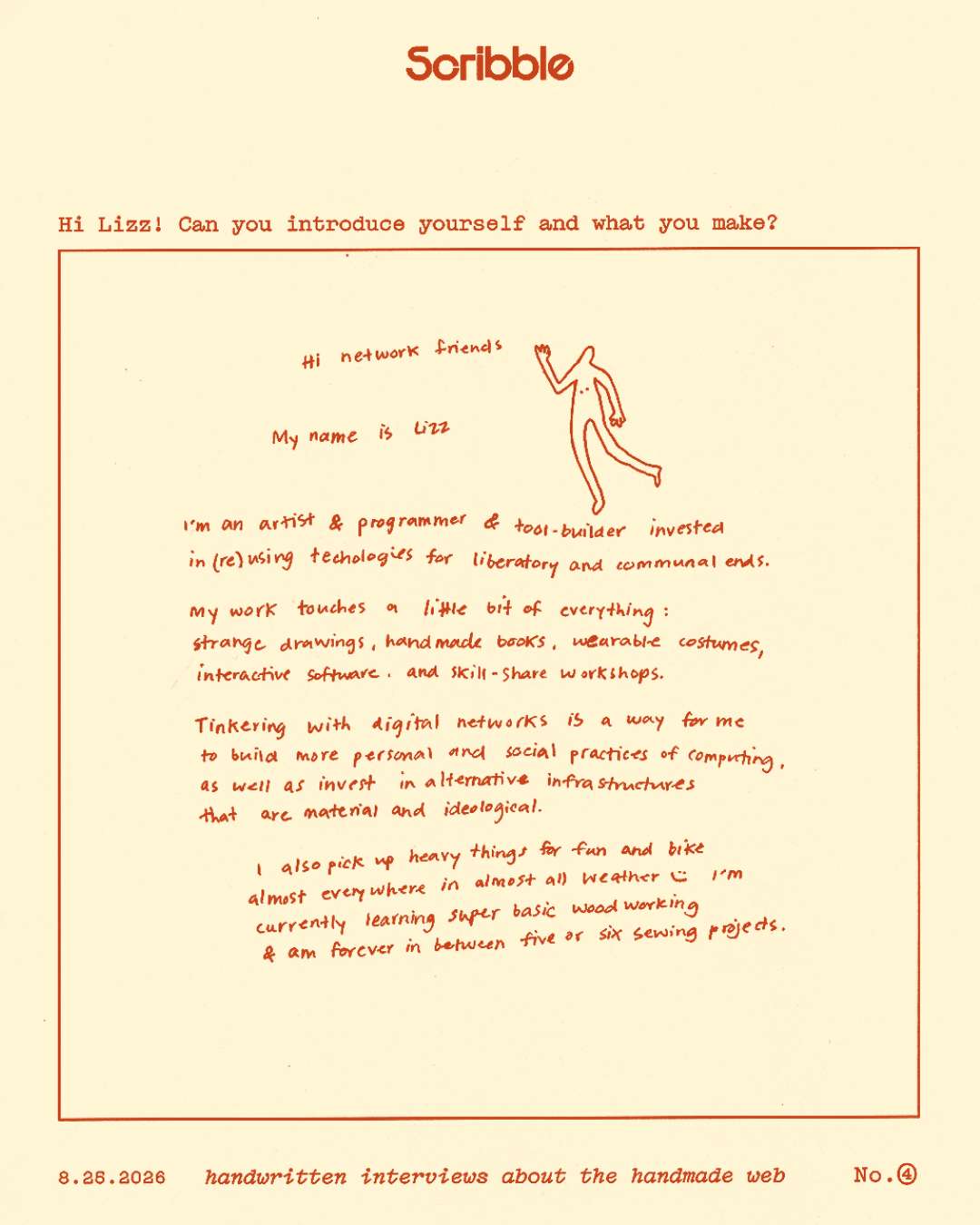
Hi Lizz! Can you introduce yourself & what you make?
Hello network friends
My name is Lizz. I'm an artist, programmer, and tool-builder invested in (re)using technologies for liberatory and communal ends.
My work touches a little bit of everything: strange drawings, handmade books, wearable costumes, interactive software, and skill-share workshops.
Tinkering with digital networks is a way for me to build personal and social practicing of computing, as well as invest in alternative infrastructures that are both material and ideological.
I also pick up heavy things for fun and bike almost everywhere in almost all weather. I'm currently learning super basic woodworking and am forever in between five or six sewing projects.
Folder Party makes “your computer a home that your friends can visit.” I love how this turns hosting into something social and technical at the same time. What changes when we think of a computer as a home? What other computing metaphors inspire you?
We're all collectors, filmmakers, sound engineers, garbage men, librarians, and groundskeepers, tending to the compost of our files over our lifetimes, whether or not we take up those roles consciously.
Folder Party is just an invitation to take up our own collections and practices more explicitly. I find the allegory of physical space can be a super useful one for ushering people's imagination and desires into digital space, which can feel very immaterial. I also want to ground the exercise in the materiality of the file system—everything on our computers are just files!
So many of the seductive metaphors of computation that we inherit—"the cloud," "the personal assistant"—are designed to obscure the material infrastructure and design of computation, in service of control and profit. We gotta unravel and interrogate those metaphors.
Personally, I'm in search of metaphors that tickle my brain, that invite me into (un)knowing, mystery, secrecy, intimacy, and sabotage that expand the horizons of possibility.
How do you make shared spaces safe to play in, especially as public spaces, both physical and digital, are increasingly surveilled?
This is a lovely question. My first response kinda comes from my gut, beyond the reach of words: we have to. We have to continue to create and live in the worlds we want.
My skill-share workshops often pair a "how to" technical walkthrough with a group practice of hands-on experimentation and play. This emerges from my own stubborn curiosity that asks: "but wait, what is that thing?" again and again until I've peeled back enough layers.
Understanding how technologies work, alongside the specific forces that produce them, is an opportunity for us to understand that those technologies are not inevitable or permanent. There are real alternatives that exist in the world right now. They give us avenues that are both tangible and ideological for disinvesting from systems of harm and surveillance.
I heard a labor organizer speak last year who said something like: "When we gather, it has to be fun as hell." If our organizing looks like our work, it's "double-exploitation by mimicry." We make technologies of/for play and liberation and unlearning through the act of gathering together. <3
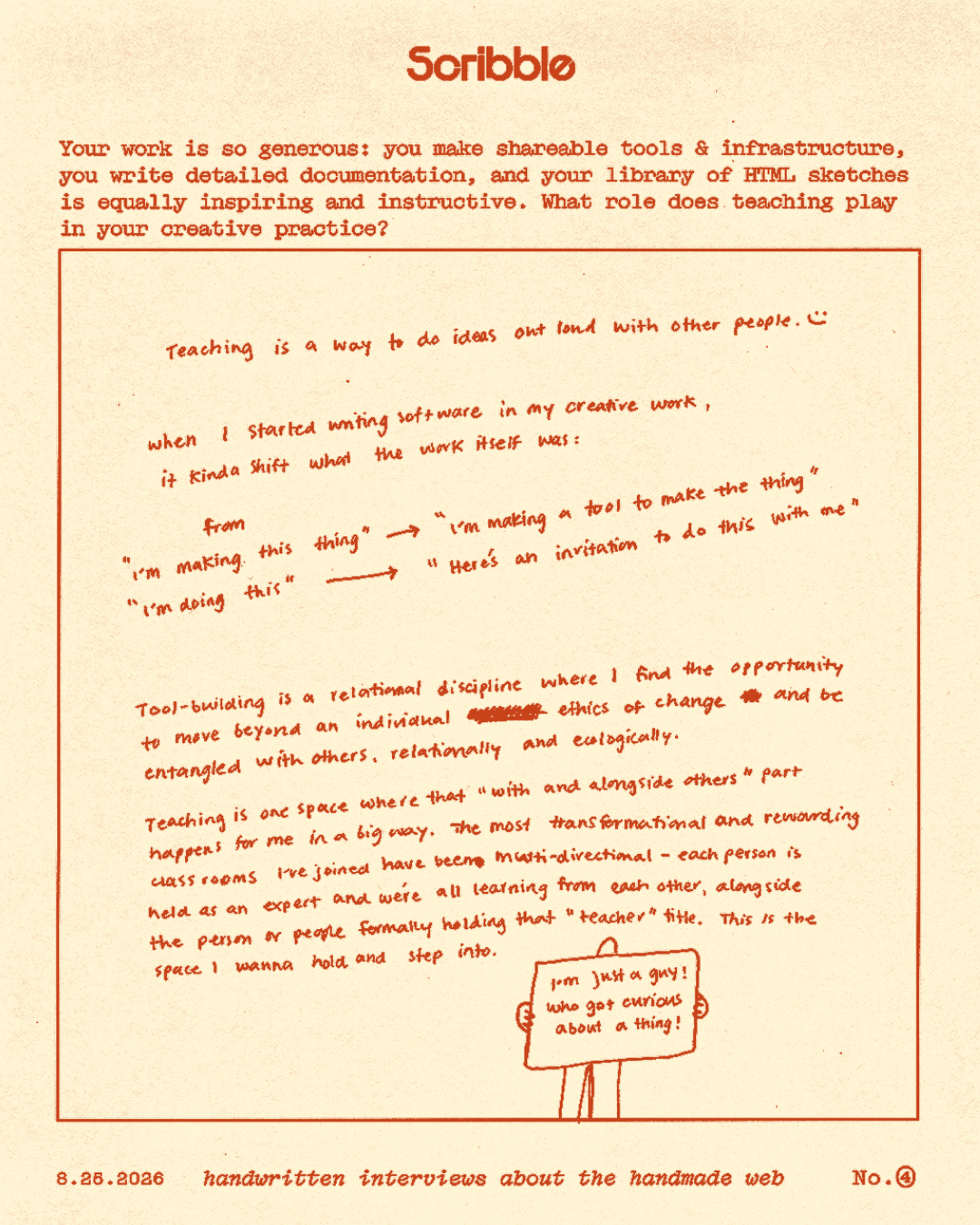
Your work is so generous: you make shareable tools & infrastructure, you write detailed documentation, and your library of HTML sketches is equally inspiring and instructive. What role does teaching play in your creative practice?
When I started writing software in my creative work, it kinda shifted what the work itself was: from "I'm making this thing" to "I'm making a tool to make this thing," from "I'm doing this" to "here's an invitation to do this with me."
Tool-building is a relational discipline, where i find opportunity to move beyond an individual ethics of change and be entangled with others, relationally and ecologically.
Teaching is one space where that "with and alongside others" part happens for me in a big way. The most transformational and rewarding classrooms i've joined have been multi-directional—each person is held as an expert and we're all learning from each other, alongside the person or people formally holding that "teacher" title. This is the space I wanna hold and step into.
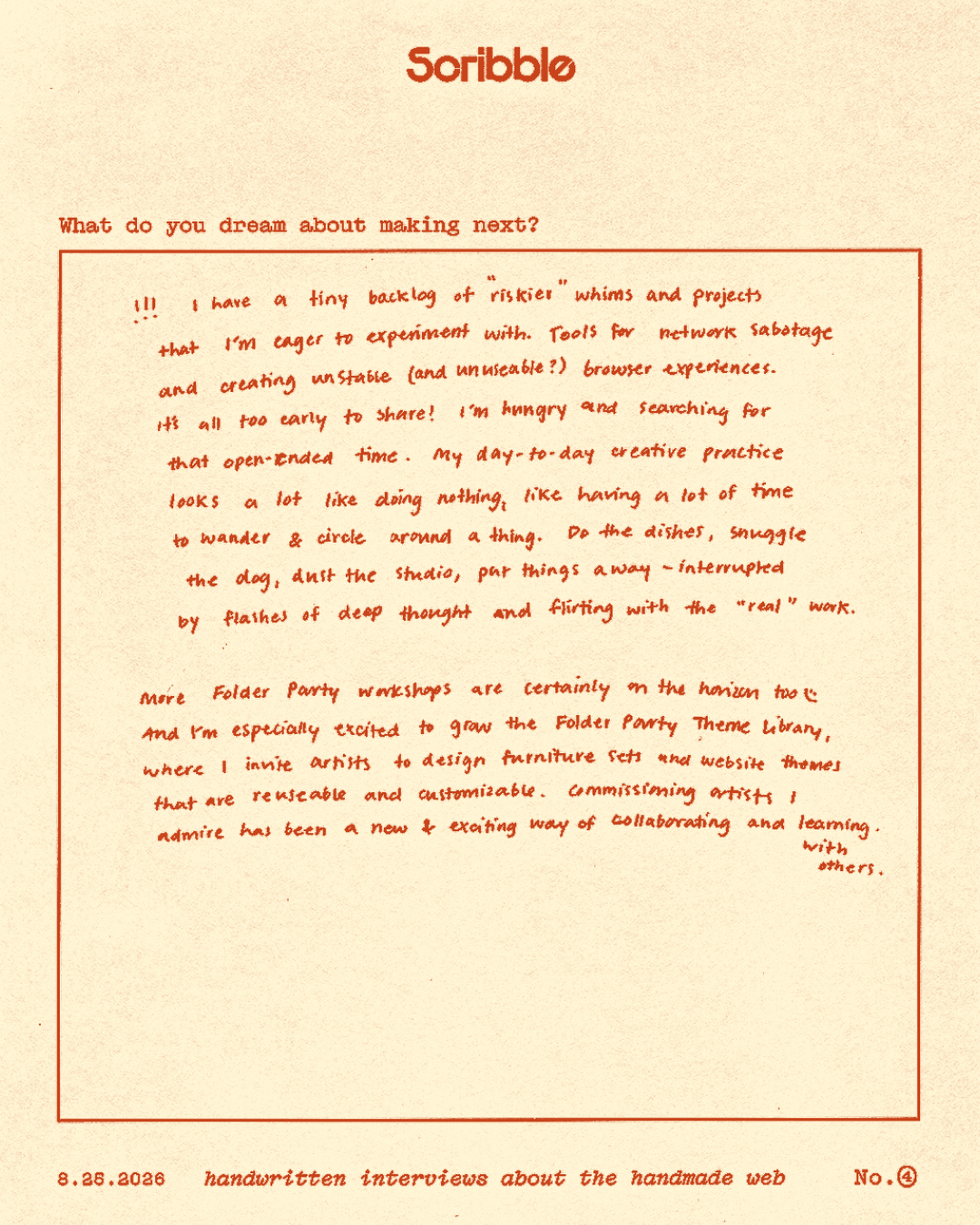
What do you dream about making next?
!!! I have a tiny backlog of "riskier" ideas and projects that I'm eager to experiment with. Tools for network sabotage and creating unstable and unusual browser experiences. It's all too early to share! I'm hungry and searching for that open-ended time. My daily creative practice looks a lot like doing nothing, like having a lot of time to wander and circle around a thing. do the dishes, snuggle with the dog, dust the studio, put things away, interrupted by deep thought and flirting with the creative work.
More Folder Party workshops are certainly on the horizon too :) and I'm especially excited to expand the Folder Party Theme Library, where I invite artists to design furniture sets and website themes that are reusable and customizable. Commissioning artists I admire has been a new & exciting way of collaborating and learning with others.
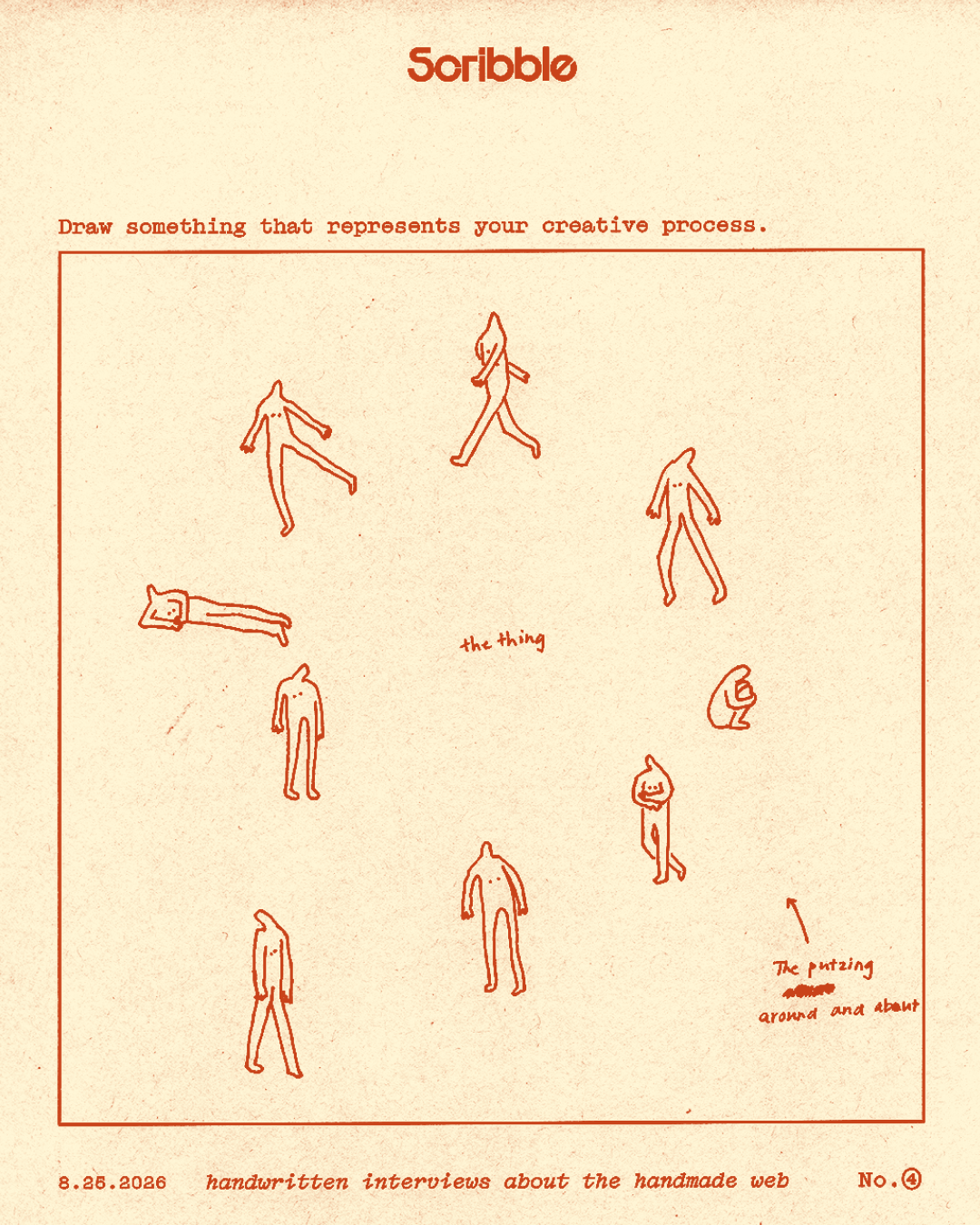
Draw something that represents your creative process.
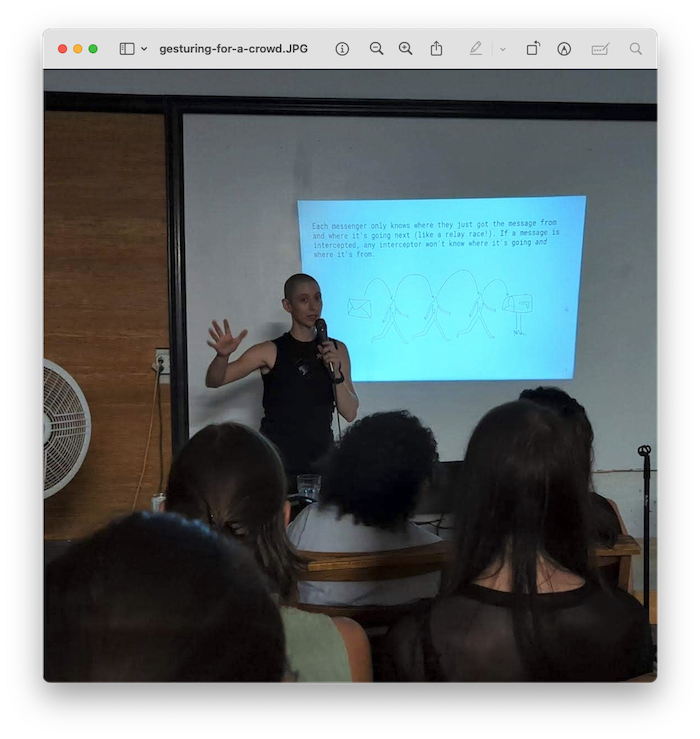
Lizz Thabet is an artist and programmer excited about homemade internets and technology skill-share. Her work touches interactive software, open-source tools, skill-share workshops, wearable costumes, and strange drawings. Tinkering with digital networks is a way for her to build personal and social practices of computing, as well as invest in alternative infrastructures that are both material and ideological. Over the past few years, Lizz has given workshops and written guides for creative communities on self-hosting websites using privacy-centric tools. They approach teaching as a way to do ideas out loud with others and orient their work towards investing in forms of collective power rather than individual ethical choice.In their day job, Lizz builds tools for other programmers with an eye towards open-source projects and accessible websites.
lizz.website